
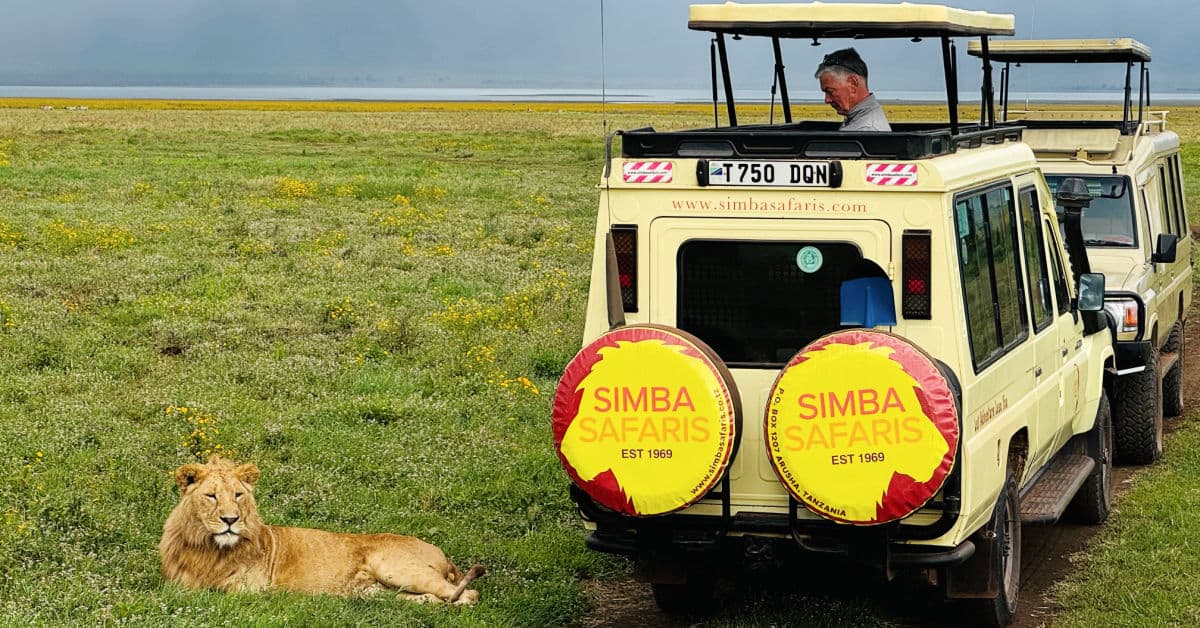
Best Safari Vehicle Type in Tanzania? Open vs Closed After Trying Both
After recently returning from an incredible 8-day safari in Tanzania, we realized something that rarely gets explained clearly before a safari. The type of safari vehicle you use shapes almost everything.
How close you feel to the animals. How comfortable you are over long days. How easy it is to photograph wildlife. Even how tired you feel by dinner.
Through a mix of planned logistics and one genuinely lucky opportunity, we experienced three different safari vehicles on one trip: a closed pop-up roof vehicle, an open vehicle, and a photographer’s vehicle. Each one felt completely different, and each made sense in very specific situations.
Here is what safari vehicles in Tanzania are actually like, based on real use and photos from our recent trip, not brochure language.
* Some of the links in this post contain affiliate links. If you make a purchase through these links, we may receive a small commission at no extra cost to you. All recommendations are from first-hand experience that I feel will deliver value to you! Thank you for your continued support.
FOLLOW & SHARE WITH A FRIEND!


Closed Pop-Up Roof Safari Vehicle

This was our closed pop-up roof safari vehicle we used in Ngorongoro Crater in Tanzania
The Pop-Up Roof Experience
We had a private guide through Pristine Trails who picked us up at Kilimanjaro International Airport in the classic closed pop-up roof Toyota 4×4 Land Cruiser.

Inside our pop-up roof closed safari vehicle in Tanzania
From there, we briefly stopped in Arusha for some fun stops and then drove to Wilderness Collection Craters Edge for the night before spending a full day exploring Ngorongoro Crater.
In the crater, closed pop-up vehicles are required, so this is not a decision point. It is simply the standard.
The vehicle felt extremely solid. Muddy roads were not an issue, and it handled the crater terrain confidently.
Most wildlife viewing happens through the pop-up roof. When there is a sighting, you stand and look out from above.

Me posing in front of a lioness at Ngorongoro Crater in Tanzania in the pop-up roof safari vehicle
The biggest benefit is flexibility. If it is dusty, windy, or raining, you simply close the roof.

A view of the pop-up roof from inside the closed vehicle
We were there in May and only ran into a quick drizzle once in the Crater, so the roof stayed open almost the entire time.

Another view of what it looks like inside the pop-up safari vehicle
The tradeoff is that you are constantly standing. No problems for the hubby, but I am petite at 5’2″, and during good sightings I often had to stand on the seat to see clearly.
It works, but it is something to factor in.

Taking photos in the pop-up safari vehicle in Tanzania

Hi, I’m Nichole. The discerning traveler, wine lover, and adventure seeker behind Enriching Pursuits.
On this website, you'll find expert insights, honest reviews, and carefully curated experiences worth your time.
I specialize in uncovering the best outdoor adventures (especially snorkeling!), incredible foodie experiences, and boutique stays for travelers who appreciate the details as much as I do.

Want more?
Stick around, explore more, and the next time you plan a trip, just Google Enriching Pursuits!
Is this your travel style?
Then subscribe below to receive my latest updates on:
→ Boutique Stays — Hotels loaded with charm & warm service
→ Sip & Savor — Wine getaways with must-visit wineries and eats
→ Outdoor Adventures — Epic snorkeling, hikes, and bike trails
→ Foodie Finds — From hidden gems to Michelin-star dining
→ Smart Travel Gear — Product reviews that make travel better
→ Nichole Pro Tips — Save smart, splurge wisely!
Windows, storage, and charging

All the little pockets in our pop-up safari vehicle
Closed vehicles have wide sliding windows that open easily. There are plenty of small storage pockets for phones, lenses, sunscreen, and snacks.

Interior of a pop-up roof closed safari vehicle with outlets
There was also a built-in charger, which quickly became essential. After hours of nonstop photos and videos, having a reliable charging option mattered far more than I expected.
Pros of closed safari vehicles
- Strong protection from rain, wind, and dust
- Very stable on rough or muddy roads
- Better suited for long-distance driving
- Ability to keep the same private guide across regions
Cons of closed safari vehicles
- Less immersive overall
- Requires frequent standing for sightings
- Can be challenging for shorter travelers
- Feels more enclosed
Who closed safari vehicles are best for
Closed pop-up vehicles made the most sense for us in the Crater and during longer road stretches, like driving from Kilimanjaro International Airport through Arusha and onward to Ngorongoro Crater.
That is a full travel day, and having a solid, enclosed vehicle was practical and comfortable. If the weather shifts or the roads get muddy, you are not thinking about exposure, you are just enjoying the ride.
In the Crater itself, having a private guide in the same vehicle for the full day allowed us to settle into a rhythm quickly.
If you are planning a visit, I share more tips on logistics and what to expect in my Ngorongoro Crater Safari Guide.
Once we flew into the Serengeti, everything shifted.
At Dunia Camp in central Serengeti and Namiri Plains in eastern Serengeti, we had different guides and open vehicles based at each camp (discussed below). It was a completely different dynamic.
Both styles worked well, but the overland closed vehicle setup does make it easier to keep the same guide across multiple parks if that continuity is important to you.

Watching a lion stroll by a closed pop-up safari vehicle at Ngorongoro Crater in Tanzania
Open Safari Vehicle

Our Open Safari Vehicle used at Dunia Camp in Tanzania
The Open Safari Vehicle Experience
In the Serengeti, we saw a mix of both open and closed safari vehicles. This is just one of the differences between the Serengeti and the crater.
I explain the distinctions in more detail in my Serengeti vs. Crater comparison. The type of vehicle usually depends on the operator, the camp, and whether your safari is fly-in or overland.
We flew from Lake Manyara Airport to Seronera Airport and explored both central and eastern Serengeti. At the Asilia camps where we stayed, Dunia Camp and Namiri Plains, every single drive was in an open vehicle.
If you’re curious about the full lodge experience, I shared a detailed Dunia Camp review and an in-depth Namiri Plains review, because the overall experience at each one deserves its own conversation.
This ended up being our favorite overall experience!

Surrounded by the Great Migration in an open vehicle at Dunia Camp
Open vehicles have no hard sides. You hear birds calling clearly, smell the grass as you pass through it, and feel the breeze against your face. It feels immediate and very alive.
At times, when a lion walks past slowly or settles just a few feet from the vehicle, you feel so close it almost seems like you could reach out and touch it. Obviously you would never do that, but that is how intimate the experience feels.
It is powerful and quite memorable.

Driving through a herd of wildebeest in the Central Serengeti in our open safari jeep
In Tanzania, most open vehicles have canvas roofs, which provide shade and make the game drive far more comfortable than being fully exposed.

Me capturing the lion action at sunset near Namiri Plains in Tanzania in our open safari vehicle
Storage and charging
The vehicle had ample outlets, canvas storage pockets, and even a horse-tail fly swatter for tsetse flies. We needed it near Dunia Camp in bushier areas, though Namiri Plains had very few flies.

Getting ready to transfer to Dunia Camp in the central Serengeti
Rain, dust, and real-world tradeoffs

Getting caught in a downpour while driving to Dunia Camp in Tanzania
Rain can be inconvenient.
On our drive to Dunia Camp, the sides had to come down quickly when the rain rolled in. Our amazing guide, Hosiana, handled it smoothly, but it is not as simple as closing a pop-up roof.
Dust is also a big factor, especially as dry season approaches. We traveled at the tail end of green season, so dust was manageable, though it was more noticeable in eastern Serengeti near Namiri Plains.
Pros of open safari vehicles
- Deeply immersive
- Better viewing and photography angles
- Strong sense of connection to the environment
Cons of open safari vehicles
- Dustier in dry conditions
- Rain requires quick adjustments
- Often shared unless booked private
Who open safari vehicles are best for
After trying both types of safari vehicles, I would choose an open vehicle again for a fly-in safari without hesitation.
If feeling close to the wildlife matters more to you than having full protection from the elements, this is the setup that delivers.
And if you are still deciding between flying and driving, my fly vs. drive safari guide covers that decision in full.

Our wonderful guide Hosiana taking us to Dunia Camp in Tanzania
The Photographer’s Safari Vehicle

Namiri Plains Photographer’s Jeep
What makes a photographer’s vehicle different
We experienced a photographer’s vehicle by pure luck while transferring between Dunia Camp and Namiri Plains.
They were out of the standard open vehicles that day, and somehow we ended up with the photographer setup instead.
Lucky us.
It instantly became my favorite safari vehicle of the entire trip.
There were only three staggered seats, each with a small lever underneath. When something appeared on the opposite side, you pressed the lever and swivelled smoothly without standing up or awkwardly repositioning.
No climbing. No shuffling.
There were no poles cutting through your frame. Just one wide, completely unobstructed viewing box.
It genuinely felt like watching a nature documentary on a massive screen, except the animals were right there in front of us!
If you ever have the option to upgrade to a photographer’s vehicle, take it. After experiencing it once, it is hard to go back.

Sitting in the photographer’s vehicle getting ready for our safari drive
Who photographer vehicles are best for
I would say these vehicles are best for serious photographers, videographers, and travelers who want uninterrupted views without constant repositioning.
Photographer Takeaway

Photographing two lionesses near Namiri Plains in Tanzania
Some photographers prefer closed pop-up roof vehicles because the roof edge provides a solid place to stabilize long lenses.
That stability can make a noticeable difference during extended sightings.
In open vehicles, stabilization is more improvised.
You might brace your lens on your leg (like my husband seen in the photo above), use a bean bag, or shift your body to get the angle you want. We even saw photographers lying on the vehicle floor with one elbow bent to steady their shot.
Neither approach is better universally. Everyone has their preference.
Nichole Pro Tip for Open Vehicle Comfort

Posing in front of a leopard tortoise in the eastern Serengeti in Tanzania
One small travel mistake I made? I brought a scarf.
I regret the scarf.
When the vehicle is moving quickly and dust kicks up, a scarf becomes surprisingly annoying. It slips, flaps around, and needs constant adjusting, especially when you are also trying to hold your camera or stand up for a sighting.
A buff/neck gaiter would have stayed in place and done its job without any effort. Not every guide wore one, but a fair number did, which was enough to convince me they had this figured out long before I did.
If you are choosing between the two, bring the buff.
Pop-Up Roof vs. Open Jeeps: Quick Comparison

Our Closed Pop-up Roof Safari Vehicle vs Open Safari Vehicle in Tanzania
Closed pop-up vehicles
- Better for long distances, rain, and dust
- Easier to have a private guide throughout
- Less immersive
- Requires standing to view sightings
Open vehicles
- Far more immersive
- Better photography angles
- Dustier and less weather protection
- Often shared unless private
Photographer vehicles
- Unobstructed views
- Built for shooting and filming
- Usually an upgrade
Final Thoughts
I went into this trip assuming lodges would matter most. I left realizing the safari vehicle quietly shapes the entire experience.
If we were booking again, we would still choose open vehicles whenever possible, especially for fly-in safaris. But for long overland routes, unpredictable weather, or heavy dust, closed pop-up vehicles make a lot of sense.
Understanding the vehicle before you book will not change the animals you see, but it will absolutely change how you experience them.

I’m Nichole, the author of all the blog posts on Enriching Pursuits. Think of me as your geeky discerning travel friend who dives deep (Google Page 20, forums, travel groups deep!) to uncover the best ways to enjoy exceptional outdoor adventures and foodie experiences.
My husband and I are experienced snorkelers, day hikers, and casual cyclists who also love delicious street food, an incredible glass of wine, and the occasional Michelin-starred meal.
Balancing full-time careers, we cherish every second of our vacation days and love sharing tips to help you do the same. If this sounds like your kind of travel, subscribe below or drop me a note with any questions. I’d love to hear from you!
Related Content

Craters Edge Ngorongoro Review: Worth the Stay?
Our epic 8-day Tanzania safari itinerary was carefully...

What to Do in Arusha, Tanzania: My 5 Favorite Things!
When my husband and I planned our amazing 8-day Tanzania...

Are Bush Planes in Tanzania Worth It? Cost, Safety, and What It’s Really Like
I was convinced I was going to be the nervous one gripping...

Dunia Camp Review: Our Firsthand Serengeti Safari Experience
My husband and I did an unforgettable 8-day safari through...
REACH OUT, FOLLOW, OR SHARE THIS POST WITH A FRIEND!
Questions about the safari vehicles we used in Tanzania?
Let me know in the comments below!
0 Comments